2025 Braden Grant Stories
Each year, the Stanford Storytelling Project awards Braden Grants to a small number of students to support the research, writing, and production of audio documentaries. The aim of the program is to help students learn how to tell powerful, research-driven stories based on testimony they gather through interviews, research, or oral history archives. Grantees receive up to $2,500, as well as teaching, training, and mentorship during the period of the grant (March-December). In January of each year, all of the documentaries are aired on KZSU and published on the Soundings podcast. All pieces will be considered for inclusion in State of the Human, the SSP’s premier, award-winning podcast. State of the Human episodes are aired weekly on KZSU, Stanford’s public radio station, and some stories reach national broadcast outlets.
Listen on:








2025 Braden Grant Stories
Saturday Dec 19, 2015
Saturday Dec 19, 2015
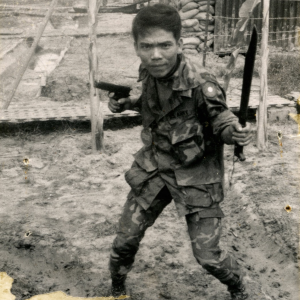
Mr. Sayes was embedded with the South Vietnamese Rangers during the Vietnam War. He rarely saw another American, and survived some of the most harrowing combat in history. Today, he teaches high school mathematics. This is his story, told to one of his former students.Featuring: Trey SayesProducer: Dustin DienhartSpecial thanks to The Stanford Storytelling ProjectPhoto: Dang Van Hoanh, Tiger Scout. 3rd Battalion, 39th Infantry Regiment, 9th Infantry Division, May 1969. Image courtesy of Trey Sayes
Saturday Dec 19, 2015
Saturday Dec 19, 2015
What is Rondon? What does it mean to be Creole in Nicaragua? In a world that increasingly seems to strive for uniformity, afro-descendant Creole people on the eastern coast of Nicaragua seek to hold on to their unique culture through their food. Join us as we travel between the farm, the lagoon and the city to explore how Creole food is changing due to outside pressures.
"Why we appreciate Rondon, it is the strongest food in our gastronomy. And it comes from Africa. I have met many Africans and they cook rondon just like us. It’s a cultural thing. That makes me proud to be black. I'm proud of my Rondon." - Ms. Gay Sterling
Featuring: Connie Tinoko, Kenneth Fox, Edward (Daha) Fox, Gay SterlingProducer: Maria DoerrMusic: Take Dis Five, Run-Down Orchestra Bluefield Sound System 2009Zion-O, Run-Down Orchestra, Bluefield Sound System 2009

Saturday Dec 19, 2015
Saturday Dec 19, 2015
Braden Grant Recipient Reade Levinson travels to Mongolia in hopes of witnessing a practice known as sky burial, in which the bodies of the dead are prepared for the afterlife. But as Reade learns on her journey, in Mongolia the forces of urbanization, modernization and environmental change may be threatening this sacred ritual. “The scene would be not very nice, when you look at a dog running around with someone’s hand in his mouth.”
Featuring: Ganbat Namjilsangarav, Christine Murphy, Tsogbadrakh and Tuya Banzragch, and Dr. Keith Bildstein.Producer: Reade LevinsonSpecial Thanks: Christy Hartman, Jake Warga, and Generation AnthropoceneMusic: All ambient recorded by Reade Levinson, sound effects downloaded from FreeSound.Image via thinkstockphotos: www.thinkstockphotos.com/image/stock-…ld/469839700
Wednesday Dec 31, 2014
Wednesday Dec 31, 2014
What differentiates what is labeled as mental dysfunction—mania, psychosis, seizures—from what is magic, spirit, or simply … beyond the scientific method? Mischa Shoni embarks on a journey to understand her own brain. On the path, she meets dragons, gryphons, crystal-eyed snakes … and some extraordinary people who see the mind beyond the limited lens of psychiatry.
This project was supported by a Braden Grant from Stanford Storytelling Project. For more information about the Braden Grant for the Study of Oral Narrative, go here:web.stanford.edu/group/storytelli….php/grants.html
Producer: Mischa ShoniFeaturing: Anusuya Starbear, Michelle BoyleSpecial thanks: Will RogersMusic: Man of Suit (Echos of Space, Fog Divided by 2, Quiet Mountaintop, Lost in the Forest, Trees of Mystery, Howling Wind, The Dancing Chairs, Wind Chimera, Redwoods & Skyscrapers)Image via Wikimedia
Wednesday Dec 31, 2014
Wednesday Dec 31, 2014
In the past few decades, orphans in Africa have become defined by snapshots: snapshots of jutting ribs, ragged clothes, hopeless eyes. Those images have become the face of international charity work and have helped drive the idea that we should send resources to help. But there are things that can’t be captured in snapshots. In this story, Christine Chen travels to the West African country of Ghana, to talk with the people directly involved with orphan care there—the social workers, orphanage directors, families, and kids. There, she encounters narratives that put an unexpected twist on our understanding of orphanages—and push us to reconsider our assumptions about the children living inside them.
This project was supported by a Braden Grant from Stanford Storytelling Project. For more information about the Braden Grant for the Study of Oral Narrative, go here: web.stanford.edu/group/storytelli….php/grants.html
Producer: Christine ChenFeaturing: Samuel Anaglate, Helena Obeng-Asamoah, Akosua Marfo, Emmanuel, Richmond, HannahSpecial thanks to: Christy HartmanSounds:Music: A Smile for Timbuctu, Chris Zabriskie, Lee RosevereImage courtesy of Brandee Cooklin
Wednesday Dec 31, 2014
Wednesday Dec 31, 2014
This story traces the origins of “We Shall Overcome” from the eighteenth century to the March on Washington, and to today. It focuses on the development of the song at the Highlander Folk School, a social justice center in Tennessee.
This project was supported by a Braden Grant from Stanford Storytelling Project. For more information about the Braden Grant for the Study of Oral Narrative, go here: web.stanford.edu/group/storytelli….php/grants.html
Producer: Beatrix LockwoodFeaturing: Candie Carawan, Clayborne Carson, Pam McMichaelSounds: Martin Luther King, Workers in Selma, AL, March on WashingtonMusic: Pete Seeger, Guy Carawan, Charlie Haden & Hank Jones, The Philadelphia Brass Ensemble, Paul Robeson, Rev. Gary Davis, Azuza Oacific Gospel Choir, Zilphia Horton, Dave Van Ronk, Fats Waller, Elizabeth CottenImage via Wikimedia
Wednesday Dec 31, 2014
Wednesday Dec 31, 2014
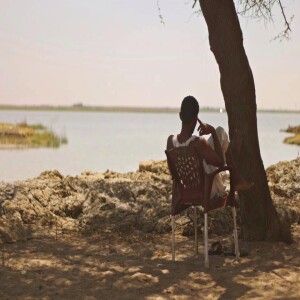
Young Sudanese in the Diaspora often experience a sense of estrangement. They feel caught between the cultures of the countries they live in and Sudan. This story investigates how some of these people have used art to explore the tensions and possibilities within their fraught relationship to the place their parents call home.
Producer: Atheel ElmalikFeaturing: Safia Elhillo, Mo, Alsarah, Dar Al NaimMusic: Alsarah and The Nubatones - نوبة نوتوAlsarah and The Nubatones - Oud SoloAlsarah and The Nubatones - Its Late (Soukara)Alsarah 5000 - Christina- Jodahwww.alsarah.comBlood Orange - It is what it isThe Wyld - OdysseyImage courtesy of Amir Mohamed
Saturday Dec 14, 2013
Saturday Dec 14, 2013
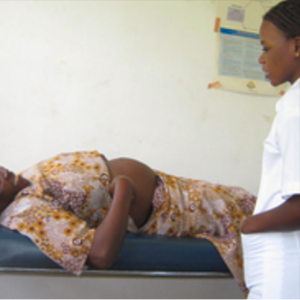
Birth is celebrated as one of the most profound and joyous moments in life. Yet in the nation of Uganda, delivering a child is an undertaking steeped in danger. The African country faces one of the highest maternal mortality rates in the world. Why are so many Ugandan women dying in childbirth?
In this piece, Charlotte Sagan explores the issues surrounding maternal health in the Southeastern district of Iganga. Conversations with Ugandan mothers, fathers and health care practitioners reveal intimate narratives of health, perseverance and family. The delivery story of a young woman named Miriam, in particular, illustrates the perils and joys of childbirth.
This project was supported by a Braden Grant from Stanford Storytelling Project. For more information about the Braden Grant for the Study of Oral Narrative, go here:web.stanford.edu/group/storytelli….php/grants.html
Producer: Charlotte SaganFeaturing: Nabalumba Miriam, Joshua Moangze, Dr. Charles Waiswa, Kaina Rita, Nampina RuthSpecial thanks: Christy Hartman, John Lee, Victoria Hurst Muirhead, Jacquie Cutts, Nakasango Evelyn, Mukalu Mohamed, Margreth MpossiMusic: Kevin MacLeod, Jamal Wasswa, Mohr Productions, Jess, Eddy KenzoImage courtesy of Charlotte Sagan
Saturday Dec 14, 2013
Saturday Dec 14, 2013
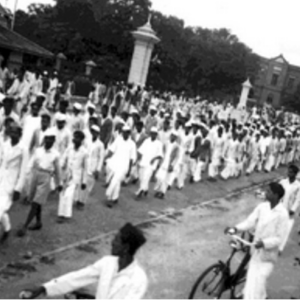
In Egypt, in Iran, and in Tunisia, we've heard a lot about the so-called Twitter and Facebook revolutions. But what about the radio revolution? Working from archives in New Delhi and London, Neel Thakkar resurrects the forgotten story of the Congress Radio -- the secret, underground radio station which, during the Quit India movement of 1942, helped keep the Indian nationalist movement alive during some of its darkest days.
This project was funded by a Braden Grant from Stanford Storytelling Project. More info on the Braden Grant here:web.stanford.edu/group/storytelli….php/grants.html
Producer: Neel ThakkarFeaturing: Usha Mehta, C.K. Narayanswami, K.A. Abbas, Anant Kanekar, and J.N. SahiniSpecial thanks: Kevin Greenbank at the Cambridge Centre for South Asia, and Kamlesh and Naina RamaniImage via wikimedia
2023 Braden Storytelling Grant